
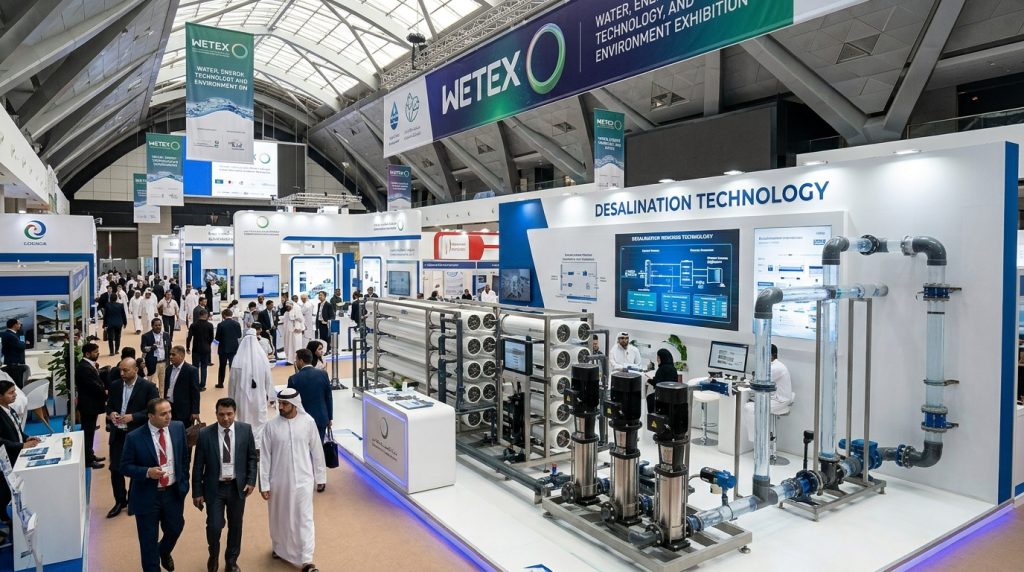
The Dubai World Trade Centre hosts a pivotal event for global water security this year. The Water, Energy, Technology and Environment Exhibition returns from October 20–22. DEWA organizes this major gathering to showcase advancements in sustainability, green economy initiatives, and modern water management in the UAE.
Freshwater resources in the region remain scarce. Meanwhile, rapid industrial growth increases the demand for clean water everyday. Consequently, desalination technology must evolve beyond traditional salt removal. Modern systems focus on lower energy use, digital automation, and brine recovery.
The venue features a dedicated Water Platform in Sheikh Saeed Hall 3. This space brings together global specialists, investors, and technology providers. Visitors can explore breakthroughs in filtration, smart monitoring, and advanced membranes. These solutions aim to strengthen long-term water security for the UAE and beyond.
Advanced Reverse Osmosis at Dubai World Trade Centre
Reverse osmosis remains a core method for seawater desalination. The process uses specialized membranes to separate dissolved salts from pure water. However, traditional systems require high energy inputs to maintain fluid pressure.
Exhibitors at the Dubai World Trade Centre are presenting next-generation membrane systems. These solutions integrate ultrafiltration and nanofiltration to protect delicate RO equipment. This multi-stage approach improves final water quality while extending membrane lifespans.
   [ Raw Seawater ]
          │
          ▼
   [ Ultrafiltration ]  ──► (Removes suspended solids and bacteria)
          │
          ▼
   [ Nanofiltration ]   ──► (Targeted removal of divalent ions)
          │
          ▼
   [ Reverse Osmosis ]  ──► (Main salt separation step)
          │
          ▼
   [ Pure Water Output ]
High salt concentrations often degrade standard RO performance over time. Chinese technology providers are demonstrating new foul-resistant membranes to solve this issue. These materials maintain operational efficiency even under severe fluid stress.
As a result, municipal operators can process harsh water feeds with fewer shut-downs. Lower maintenance needs translate directly into lower operational costs. Ultimately, these advanced membranes make large-scale desalination far more sustainable.
High-TDS Membrane Systems and Energy Savings
Brine management presents a serious challenge for modern desalination plants. High Total Dissolved Solids can damage standard equipment quickly. Therefore, treating concentrated brine requires specialized technology and careful engineering.
A dedicated technical seminar at the event examines high-TDS membrane systems. These advanced setups process salt concentrations reaching up to 24% total dissolved solids. In contrast, standard reverse osmosis operates at much lower salinity thresholds.
Furthermore, these new systems can reduce energy consumption by up to 40%. They achieve water recovery rates of up to 70% in high-salinity applications. That efficiency drop cuts power demands significantly across long operational cycles.
By recovering more water from brine, operators reduce overall liquid waste. The process also allows industries to harvest useful industrial salts from residual streams. Thus, high-TDS technology converts environmental waste into valuable commercial products.
Zero Liquid Discharge Innovations at Dubai World Trade Centre
Zero Liquid Discharge technology is gaining major momentum across industrial sectors. Traditional ZLD relies heavily on thermal evaporators and energy-intensive crystallizers. These old methods demand huge power inputs to clear wastewater completely.
+-----------------------------------------------------------------+
|                     TRADITIONAL ZLD APPROACH                    |
|  [Wastewater] ──► [Thermal Evaporator] ──► [Crystallizer] ──► Waste |
|                   (Very High Energy Use)                        |
+-----------------------------------------------------------------+

+-----------------------------------------------------------------+
|                     MODERN MEMBRANE ZLD SYSTEM                  |
|  [Wastewater] ──► [High-TDS Membrane] ──► [Reduced Thermal Step]|
|                   (Cuts Energy Up To 40%)                       |
+-----------------------------------------------------------------+
Innovators at the Dubai World Trade Centre demonstrate modern membrane-based ZLD pathways. These setups concentrate brine efficiently before any thermal stage is required. Consequently, facilities can reduce or even eliminate costly thermal processing.
Chemical and textile manufacturers produce complex wastewater streams daily. Deploying high-efficiency ZLD systems helps these plants recycle water internally. This reduces their reliance on municipal freshwater sources during peak production.
Moreover, lower power consumption aligns directly with regional carbon reduction goals. Facilities achieve higher compliance with local environmental standards through these systems. Advanced ZLD proves that industrial growth and ecological care can coexist.
Integrated Filtration Systems: RO, Nanofiltration, and Ultrafiltration
Modern water treatment relies on interconnected filtration layers working in harmony. A single filtration step rarely delivers optimal purity for industrial standards. Therefore, engineering teams combine multiple specialized membranes into unified treatment chains.
Ultrafiltration acts as the primary defense line for desalination plants. It removes suspended solids, fine particles, and harmful biological organisms. This step prevents organic buildup from reaching sensitive downstream equipment.
Nanofiltration operates at a smaller molecular scale than ultrafiltration. It selectively targets divalent ions and specific dissolved compounds in feed water. By softening the water first, it reduces scaling risks inside main reverse osmosis units.
Finally, reverse osmosis performs the ultimate dissolved salt separation step. Exhibitors show how combining these three stages optimizes overall plant throughput. This integrated approach ensures consistent output across diverse industrial applications.
Smart Water Management and Automation Technologies
Digital transformation is changing how modern water treatment plants operate daily. Automated sensors monitor fluid pressure, temperature, and chemical balance continuously. This continuous data stream allows operators to spot minor anomalies before failures occur.
Exhibitors in the Indian Pavilion are showcasing AI-powered intelligence platforms. These digital tools analyze live performance data to adjust pump speeds automatically. As a result, treatment plants minimize excess energy use during off-peak hours.
Automated dosing systems also regulate chemical inputs with extreme precision. Precise chemical management prevents over-treatment while protecting system components. Therefore, plants lower operational expenditure while maintaining strict water safety standards.
Digital twin technology enables engineers to simulate operational changes safely. Operators test new filtration profiles in virtual environments before physical deployment. Smart automation clearly transforms passive treatment plants into adaptive, highly efficient assets.
Advanced Seawater and Wastewater Filtration Solutions
Pretreatment remains critical for extending the operational lifespan of membrane equipment. Raw seawater carries organic debris, sand, and fine microorganisms into intake pipes. Without thorough initial filtering, these materials quickly clog high-pressure pump systems.
The Russian Export Centre features specialized filtration technologies for seawater and wastewater. Participating companies display heavy-duty physical strainers and advanced media filters. These rugged units capture large particulates before water reaches delicate processing zones.
Proper mechanical filtration protects expensive RO membranes from permanent physical damage. It reduces the frequency of mandatory chemical wash cycles dramatically. Consequently, plant operators experience fewer unplanned operational shutdowns throughout the year.
Furthermore, improved wastewater filtration supports municipal water recycling programs. Communities can treat urban runoff and industrial effluent for secondary agricultural use. Robust filtration secures vital water supplies across every stage of use.
Brine Management and Circular Resource Recovery
Desalination produces two distinct outputs: fresh potable water and hyper-saline brine. Discharging concentrated brine directly into marine ecosystems creates environmental concerns. Therefore, sustainable brine management has become a central focus for researchers.
                  ┌──► [ Fresh Potable Water ]
[ Raw Seawater ] ─┤
                  └──► [ Concentrated Brine ] ──► [ Resource Recovery ]
                                                        │
                                                        ├──► [ Clean Recycled Water ]
                                                        └──► [ Industrial Salts / Minerals ]
Exhibitors present circular approaches that extract valuable resources from residual brine. Advanced separation systems recover high-purity industrial salts like sodium chloride and calcium. These recovered minerals serve chemical manufacturing, construction, and pharmaceutical applications.
This approach transforms brine from an operational waste into a revenue stream. By harvesting minerals, facilities offset part of their initial processing costs. Moreover, reducing liquid discharge volumes minimizes the impact on fragile coastal ecosystems.
Circular water management changes how regional planners view ocean resources. Brine processing turns a major ecological challenge into a sustainable industrial opportunity. This strategic shift strengthens long-term economic resilience across the region.
Energy-Efficient Desalination for the Green Economy
Desalination requires substantial electrical energy to drive high-pressure water pumps. Thermal desalination relies on massive heat inputs to evaporate salt water. In contrast, reverse osmosis cuts energy demands by relying on mechanical pressure.
Exhibitors highlight energy recovery devices that capture hydraulic pressure from waste streams. These compact devices transfer energy directly back into incoming feed lines. Consequently, overall electrical requirements drop significantly across daily plant operations.
Combining energy-efficient pumps with solar power generation yields remarkable operational results. Solar-powered desalination plants run cleanly during peak daylight hours without high grid power costs. This integration accelerates regional progress toward clean energy targets.
Furthermore, efficient operations reduce the overall carbon footprint of municipal water production. Decreasing power usage directly lowers greenhouse gas emissions from conventional power plants. Smart energy design ensures long-term water availability without compromising environmental health.
Connecting Global Innovators at the Exhibition
The event serves as an international hub for technical collaboration and trade. Over 3,100 exhibiting brands from 65 countries gather under one roof. Engineers, investors, and public officials exchange actionable ideas throughout the three-day showcase.
International pavilions from Germany, Belgium, China, and Russia present cutting-edge technologies. These global contributions cover media filtration, smart digital monitoring, and specialized hardware. Local utility providers gain direct access to proven global innovations.
This collaborative environment drives faster adoption of high-efficiency water solutions. Cross-border partnerships help scale technical breakthroughs from laboratory testing to municipal implementation. Knowledge sharing accelerates regional efforts to secure sustainable water futures.
Businesses supporting sustainability events require high-impact event branding tools. Companies exhibiting at major trade fairs can use professional displays, banners, and signage to boost visibility. For tailored display solutions, Izra UAE offers customized signage designed to enhance brand communication.
Exhibiting brands rely on clear visual presentation to attract key industry partners. Premium signage helps technology providers highlight key features like energy efficiency and ZLD capabilities. Clear visual messaging builds strong brand authority on crowded trade show floors.
Key Water Technologies Featured at the Showcase
Visitors can explore a diverse spectrum of water treatment solutions:
- High-efficiency reverse osmosis membranes for seawater intake
- Selective nanofiltration units for hard water pre-softening
- Ultrafiltration systems for particulate and biological removal
- High-TDS membrane systems for heavy industrial brine
- Zero Liquid Discharge systems for minimized waste
- AI-driven plant monitoring platforms and smart sensor networks
- Energy recovery devices for high-pressure pumping systems
- Resource recovery systems for industrial salt extraction
These technologies address every step of the modern urban water cycle. Pretreatment layers preserve hardware, while smart controls optimize daily performance. Finally, recovery systems extract maximum value from wastewater streams.
Together, these integrated solutions create flexible water production networks. Facilities can adapt output dynamically based on seasonal demands or changing water quality. This technical adaptability ensures steady water supply under challenging climate conditions.
Driving Water Security for the Future
Water security remains fundamental to economic growth, food production, and urban expansion. Climate variability and population growth put unprecedented stress on natural freshwater reserves. Therefore, investing in scalable water technology is essential for long-term survival.
The Water Platform provides space for specialists to address these pressing global issues. Panel sessions cover resilient infrastructure design, operational efficiency, and circular water reuse. Experts share practical insights on managing large municipal water networks efficiently.
The focus extends far beyond basic seawater desalination techniques. Water recycling, smart distribution networks, and brine reduction receive equal attention from sector leaders. Integrating these tools creates robust defense strategies against future water scarcity.
For regional leadership, adopting advanced water tech is a strategic imperative. Efficient desalination protects communities while supporting sustainable economic development across sectors. Modern innovations ensure that future generations inherit reliable, clean water supplies.
Conclusion
The Dubai World Trade Centre brings global water pioneers together to showcase game-changing innovations. Advanced RO membranes, high-TDS filtration, ZLD systems, and AI automation lead this technological evolution. Desalination is no longer just about salt removal; it now focuses on resource recovery, energy efficiency, and environmental care. These advancements empower the UAE to strengthen national water security while building a clean, sustainable green economy.